

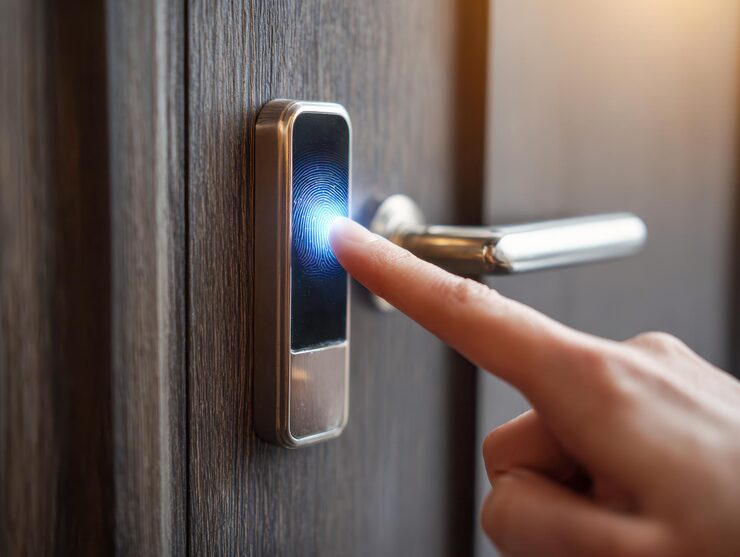
Smart locks get pitched heavily on convenience — no more fumbling for keys, remote unlocking for guests, activity logs showing who came and went. What gets less attention in the marketing is the handful of technical and security details that actually determine whether a specific smart lock is a good fit for a specific door, and skipping that homework is how people end up with an expensive lock that doesn’t quite work the way they expected.
Not Every Smart Lock Fits Every Door
Smart locks are generally built around one of two approaches: a full deadbolt replacement or a retrofit device that attaches over your existing deadbolt’s thumb-turn. Retrofit models are easier to install and preserve your existing keyed cylinder, but they’re bulkier and can look less integrated. Full replacements look cleaner but usually require matching the door’s backset measurement and bore hole size, which varies enough between doors that a lock advertised as universal still sometimes doesn’t fit without adjustment.
Connectivity Type Changes What You Actually Get
- Bluetooth-only locks: work reliably for unlocking when you’re standing at the door, but can’t be controlled or checked remotely without an added bridge device, and won’t send activity alerts when you’re away.
- Wi-Fi connected locks: allow full remote access and real-time notifications but rely more heavily on home Wi-Fi stability and tend to drain batteries faster than Bluetooth-only models.
- Hub-dependent locks: connect through a separate smart home hub rather than directly to Wi-Fi, which can mean more reliable performance but adds another device and potential point of failure to the system.
Battery Life and the Lockout Scenario
Nearly every smart lock runs on standard replaceable batteries rather than being hardwired, and battery life ranges from several months to over a year depending on usage and connectivity type. The more important detail is what happens when the battery actually dies — nearly all reputable smart locks include either a physical key override or an external contact point for emergency power, and checking for this before buying prevents an unpleasant surprise of being locked out entirely.
If you’re building out a broader smart home setup rather than just replacing one lock, our ultimate guide to choosing the best home smart devices covers how a smart lock typically fits alongside cameras, sensors, and other connected devices.
Security Considerations Beyond the Marketing
A smart lock’s security depends on more than just the physical deadbolt strength — encryption standards for the wireless connection, how access codes are stored and transmitted, and whether the manufacturer has a track record of patching vulnerabilities all matter more than most buyers initially consider. A lock certified to recognized physical security standards, alongside reasonable digital security practices from the manufacturer, is a stronger overall bet than one chosen purely on smart features.
Checking for independent physical security certification, such as testing standards maintained by UL, is a reasonable baseline before trusting a smart lock as your primary means of securing an entry door.
Installation Realities
Most smart locks are genuinely DIY-friendly, typically installable with a screwdriver in under 30 minutes, but door alignment matters more than people expect — a door that’s slightly out of square can cause a motorized deadbolt to bind or fail to fully extend, which shows up as unreliable locking that has nothing to do with the smart features themselves. Testing the manual deadbolt operation smoothly before installing the smart version catches this issue early.
For people newer to home improvement projects generally, our top smart devices to revolutionize your home roundup is a good starting point for prioritizing which smart upgrades to tackle first.
The Bottom Line
A smart lock is a worthwhile upgrade for most homes, but the right choice depends on door compatibility, how much remote access actually matters for your household, and whether the manufacturer takes both physical and digital security seriously. Convenience features are the easy part to compare — fit and security are the parts worth the extra research.


