

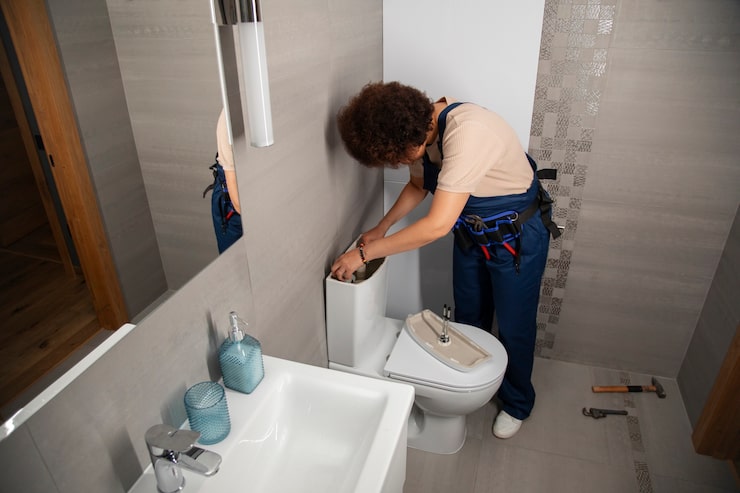
A running toilet is one of the most common household plumbing complaints and, in almost every case, one of the cheapest and fastest to fix yourself. It’s also one of the most quietly expensive problems to ignore — a toilet that runs continuously can waste hundreds of gallons of water a day without anyone in the house noticing until the water bill arrives.
Why Toilets Run in the First Place
Inside the tank, a flapper valve seals the drain hole after each flush, and a fill valve refills the tank to a set level. A running toilet almost always means one of these two parts isn’t sealing or shutting off correctly — either the flapper isn’t creating a full seal, letting water slowly leak into the bowl, or the fill valve isn’t shutting off once the tank reaches its target water level.
Diagnosing Which Part Is the Problem
- The dye test: add a few drops of food coloring to the tank water and wait 10 minutes without flushing — if color appears in the bowl, the flapper isn’t sealing.
- Check the water level: if tank water sits above the overflow tube (the vertical tube in the center of the tank), the fill valve isn’t shutting off at the right point.
- Listen for the sound: a faint hissing or trickling sound with the tank lid off, even when nothing’s been flushed recently, usually points to the fill valve rather than the flapper.
- Look at the chain: a flapper chain that’s too tight can hold the flapper slightly open; too loose and it might not lift the flapper enough during a flush, which can cause a different but related running issue.

Fixing a Flapper Problem
Turn off the water supply valve behind the toilet, flush to empty most of the tank, and unhook the old flapper from its mounting pegs and the flush chain. Universal flapper replacements are inexpensive and fit most standard toilets — matching the size and shape to the original before buying prevents a return trip to the hardware store. Installing the new flapper and adjusting the chain length so there’s a small amount of slack, without excess, usually resolves the issue immediately.
For the broader mechanics of how these tank components connect to the rest of your home’s system, our beginner’s guide to understanding plumbing systems is a useful companion to this specific fix.
Fixing a Fill Valve Problem
If the water level test points to the fill valve, adjusting the float — either a ball on an arm or a cylindrical float around the fill valve itself, depending on toilet age — to sit lower often solves a minor overfilling issue without replacing anything. If adjusting the float doesn’t stop the running, the fill valve itself has likely worn out internally and needs replacing, which is a slightly more involved but still very manageable repair with a standard replacement kit.
Once this fix is done, a lot of the other small plumbing annoyances around the house tend to fall into the same category — see our list of quick plumbing repairs to save time and avoid bigger issues for what else is worth tackling in the same afternoon.
Why This Fix Matters More Than It Seems
A running toilet is easy to dismiss as a minor annoyance, but the water waste adds up fast, and in homes with a septic system, constant running water can also affect how the system processes waste over time. This is one of the rare home repairs where a $6 part and fifteen minutes of work reliably solves a problem that would otherwise cost real money every single month it goes unaddressed.
For more on the water-waste side of this issue, the EPA’s WaterSense program has additional guidance on toilet efficiency and leak detection.
The Bottom Line
Nearly every running toilet comes down to a worn flapper or a misadjusted fill valve, both of which are cheap, beginner-friendly fixes that don’t require calling a plumber. Running the dye test first saves time by pointing you straight at the actual problem instead of guessing.