


There’s a particular kind of frustration that comes from watching a floor deteriorate in slow motion. It’s not one dramatic event – it’s a stain here, a soft spot there, maybe a patch where the color’s gone strange after months of cleaning chemicals or accidental spills. By the time it’s obviously bad, the damage has usually been building for a while, quietly, underneath a surface that was never really equipped to fight back.
This is a story that plays out constantly in facilities that deal with acids, solvents, cleaning agents, or industrial byproducts on a regular basis. Manufacturing plants, labs, automotive shops, even some commercial kitchens – anywhere chemicals touch the floor regularly, ordinary flooring just doesn’t stand much of a chance long-term.
Why Regular Floors Cave Under Chemical Exposure
Standard concrete and basic coatings are porous, which sounds like a small technical detail but it’s actually the whole problem. That porous surface soaks up whatever spills on it – oil, acid, harsh cleaners – and once those substances get in, they start breaking things down from the inside. Discoloration, pitting, crumbling, eventually structural weakness. None of it happens overnight, but all of it adds up faster than most people expect.
That’s really the entire reason chemical resistant flooring exists as its own category. It’s engineered specifically to create a barrier that blocks harsh substances from soaking in and doing that slow, invisible damage, which makes it a natural fit for facilities where chemical exposure is just part of daily operations.
What’s Actually Happening at the Material Level
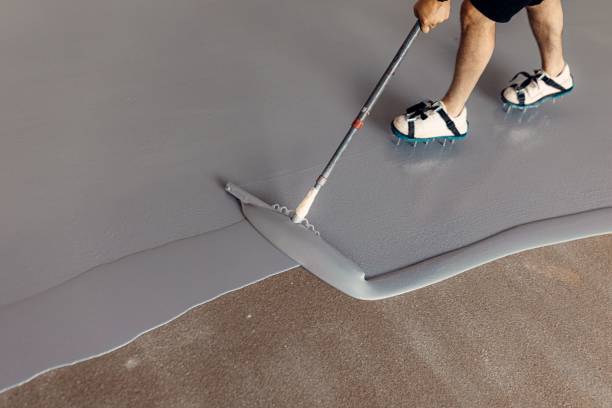
It’s not just a thicker coat of paint, if that’s what you’re picturing. These systems use resin formulations specifically chosen for their resistance to acids, solvents, and other aggressive substances, and the surface is applied in a way that leaves no seams or gaps where liquid could sneak underneath.
- Worth knowing going in: not all chemical-resistant systems handle the same substances equally well, so it really pays to tell your installer exactly what your floor deals with day to day.
That one conversation upfront – being specific about what’s actually hitting the floor – tends to save a lot of headaches down the road. A system built for mild cleaning agents isn’t necessarily going to hold up against something more aggressive like industrial solvents.
Why This Matters Beyond Just Looking Clean
There’s a safety piece here too that’s easy to overlook. A floor that’s deteriorating from chemical exposure often gets uneven or crumbly, which becomes a genuine trip hazard over time. There’s also the compliance angle – plenty of industries have regulations around flooring in spaces where hazardous substances are handled, and a properly rated system helps keep facilities on the right side of those requirements without constant scrambling before inspections.
Wrapping This Up
A floor that’s slowly losing a fight against chemicals isn’t really a cosmetic issue; it’s a structural one, and it tends to get more expensive the longer it’s ignored. Catching it early, or better yet, planning for it from the start, saves a lot of money and hassle down the road. High Performance Systems has worked with facilities across a bunch of different industries dealing with exactly this kind of exposure, helping match the right system to the actual substances a space deals with rather than offering a generic fix. A floor that can actually stand up to what gets thrown at it is one less thing to worry about during an already busy workday.
FAQs
- How do I know if my floor is being damaged by chemicals?
Look for discoloration, pitting, soft or crumbly spots, especially near areas where spills happen often.
- Can this type of flooring handle acids and solvents both?
It depends on the specific formulation, so it’s important to tell your installer exactly what substances your space deals with.
- Is this only for industrial facilities?
Not at all – labs, automotive shops, and even some commercial kitchens benefit from this level of protection too.
- How long does chemical resistant flooring typically last?
With proper installation and care, many systems hold up well for a decade or more, even under regular exposure.
- Can it be installed over an already damaged floor?
In most cases, yes, though significant damage usually needs repair first before the new system goes down.


